
We Want Our Youth to Live: Teaching for Justice
“There is perhaps no other sector that reflects the fractured nature of civil society in the United States more than public education. Despite the U.S. Supreme Court Decision calling for schools to be racially integrated, public schools across the United States remain largely segregated with respect to race and class makeup of their student populations. Public schools are not only segregated but in most American cities, poor children have been co signed to schools that show very little evidence of serving their educational needs. On every known measure of academic performance, the vast majority of students attending urban public schools in the U.S. (especially those who are African American and Latino) are deficient with respect to basic literacy and math skills” – Pedro Noguera in The Trouble with Black Boys
This reality, coupled with those of mass incarceration, police brutality and public health for people of color in this country, creates an urgency for all educators, artists, organizers, parents and concerned citizens to lead creative initiatives that drive change. We know the work is happening, now we must collaborate and move together towards transformation, for the youth, for our future.
What do we do?
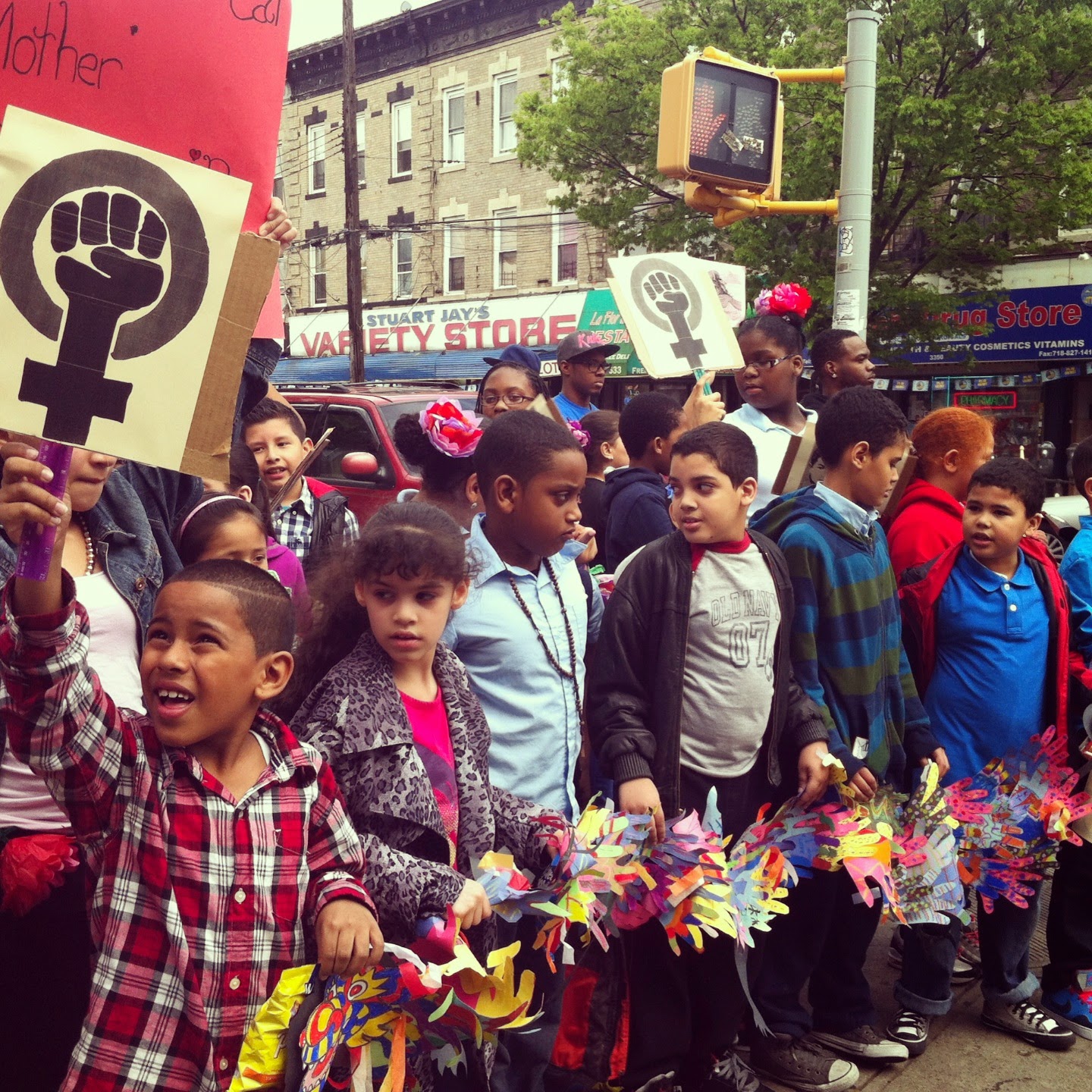
It is an educator’s responsibility to connect student’s current reality to a historical context that helps them understand the socio-political environment they live in today. This is my belief. ARTIS is an organization I have co-founded that works to make those connections. Our work is rooted in uncovering the beauty in our humanity and dissecting the structures that limit us from realizing our full potential. At the heart of our work with young people is our desire for them to understand the world through a lens that allows them to realize their power.
How?
We work from a strengths-based perspective. This means we enter the classroom understanding that young people hold so much knowledge, cultural capital, and talent. We cultivate a space of trust and use art to talk to our young people. Each project is centered in a framework that uses social justice pedagogy to look past the surface of current events and emotions and critically analyze the situation. Despite each project’s varying final outcome, participant experiences demonstrate in post-surveys/interviews that they feel a stronger connection to their peers, more confident in who they are and that they feel more able to make a difference in their community.
We create the world we want to see in our classroom first.
Given our current situation, where black and brown young people are criticized, analyzed, and thrown to the side often. As facilitators we aim to break down barriers of separation standardized curriculum and tests have created between what we should be learning and what we need to learn to pass the test. Through our workshops and our commitment to the process, we are able to engage our students in dialogue about issues that are in need of dramatic change. To us, change means beginning first to look at ourselves as people with value and worth to the world. This is where a statement like “I am powerful,” “I am proud of who I am,” comes from. When students can begin to see themselves as artists, as creators of their reality, declarations like these demonstrate a shift in consciousness that translates into the educational and social spaces they exist in.
A Context and Perspective
Leading lessons on race, rights or one’s responsibility to society in a classroom space is an art in itself. With classrooms and schools being a microcosm of what our city is, a teacher is up against all odds, especially if they are teaching through a social justice lens. What we have found successful, has been crafting a framework for lessons that provides a structure for critical analysis of the content that is required to be taught. This allows for the counter-narrative or the “other” narrative to be brought into the space. Specifically linking to ELA and social studies classes, students begin to ask, whose story is not being told here? Where am I and my family’s history represented? Who am I through the lens of this author/text? Additionally, an analysis of current events like the murder of Mike Brown in Ferguson can be taught through the same framework weaving in common core strands (see an example here).
 Augustina Warton